Choose a fold
Test the sheet in both directions; the easier fold can suggest a more comfortable spine.
Printmaking and small-run publishing
Brenivako is a practical reading room for ink, folds and independent publications. Make a modest paper object that can travel beyond the worktable.
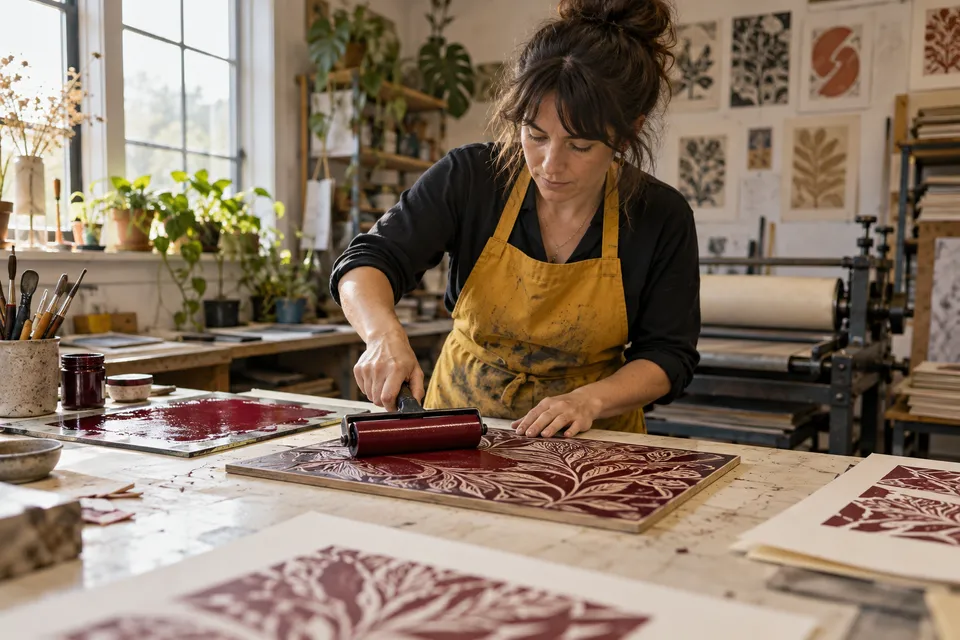
01 / Begin with a sheet
The size of a sheet determines how a reader holds it. Start with a real fold and a short piece of content, then let handling influence the shape of the publication.
02 / The paper route
These working notes move from a blank dummy to a small exchange. Each asks for a physical decision that can be inspected before you commit to an entire run.
Test the sheet in both directions; the easier fold can suggest a more comfortable spine.
Use a small proof to inspect where transparent layers create a third colour.
Number a folded sheet by hand before placing content into a flat layout.
Carry a shape across several pages while changing its scale or position.
Check the closed booklet before selecting thread length or a fastening method.

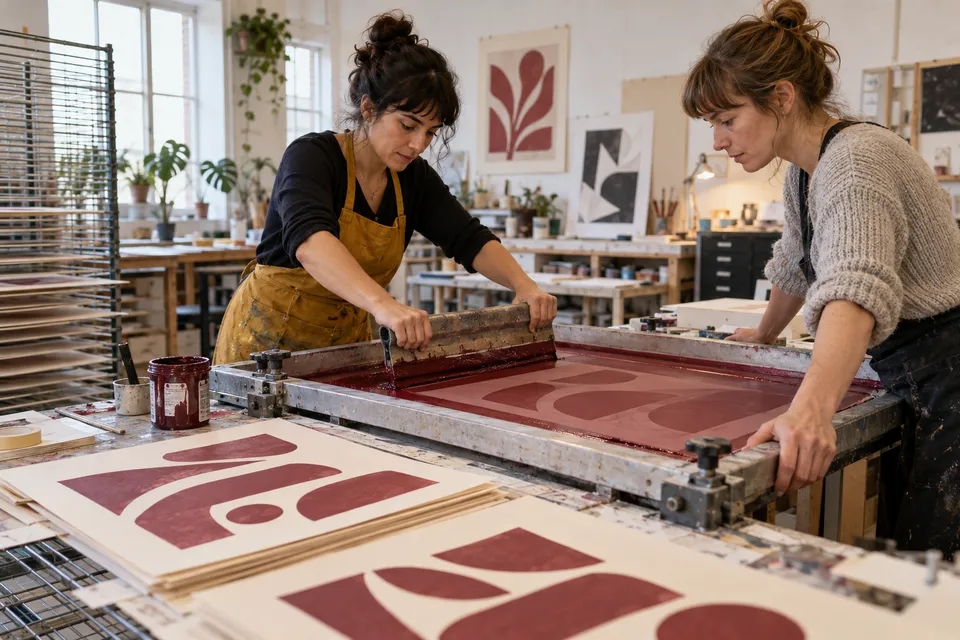
03 / The shared worktable
Separate clean paper from wet ink and give drying sheets their own space. A simple working arrangement reduces accidental marks and makes collaboration more predictable.
Read the print exercises04 / Choose a working mode
An edition develops through different kinds of attention. Switch between these working modes when the next useful action becomes unclear.
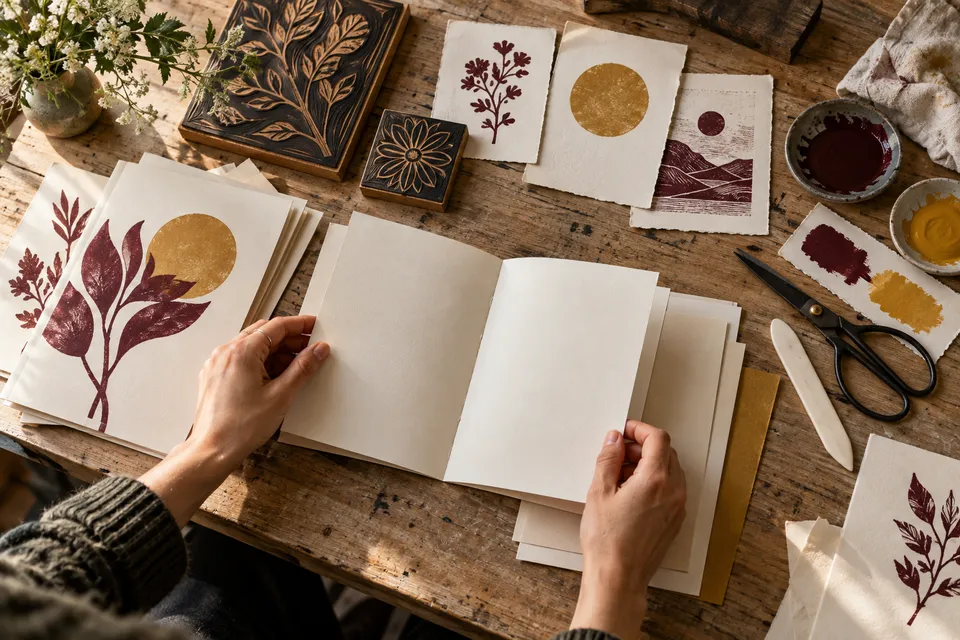
Print a small area using the intended paper. Check how the ink sits on its surface and where the image loses detail before preparing a larger sheet.
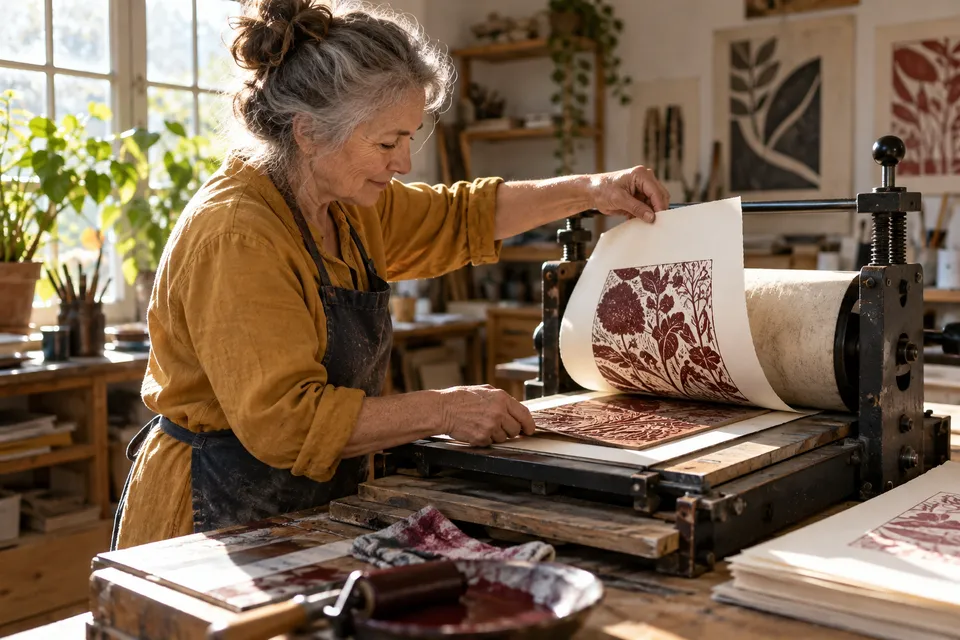
Keep the ink mixture and paper stock stable for a short run. Number the trials so any shift in pressure or alignment can be connected with a visible result.
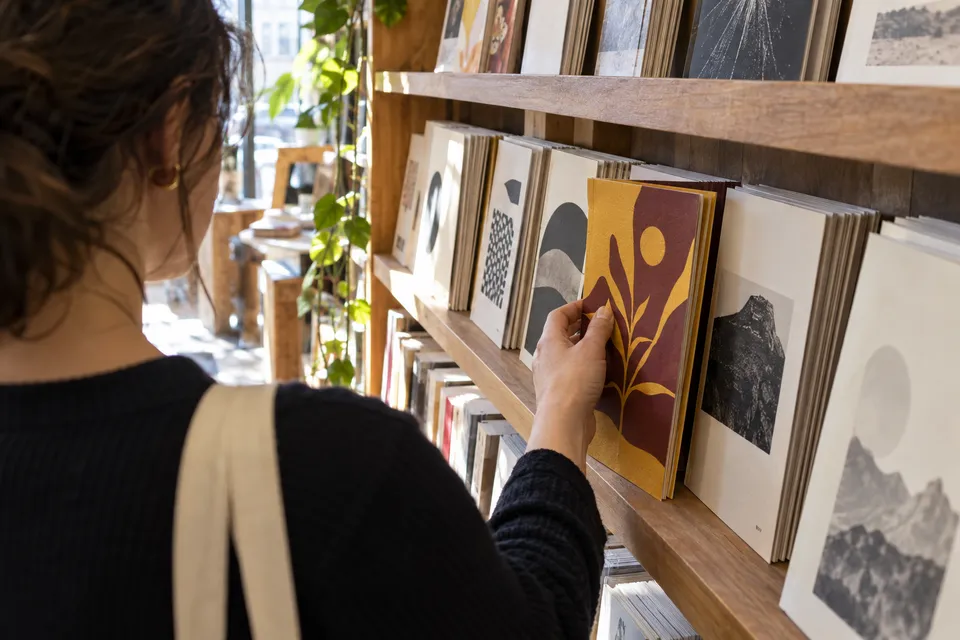
Offer an uncoached reader a folded sample. Observe where they open it and which panel they consider first; use that evidence to revise the sequence.
05 / Hold the sequence
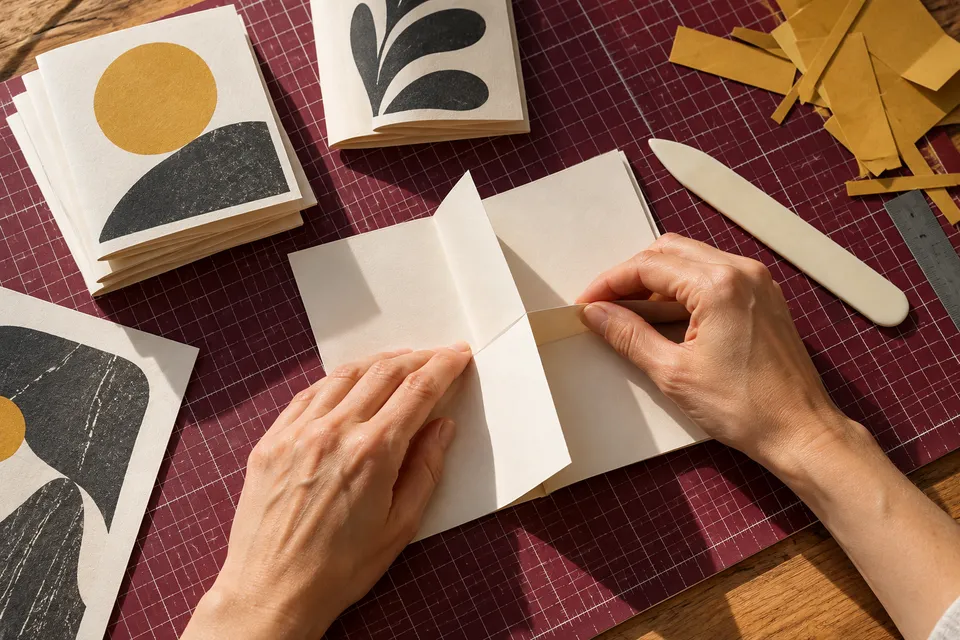
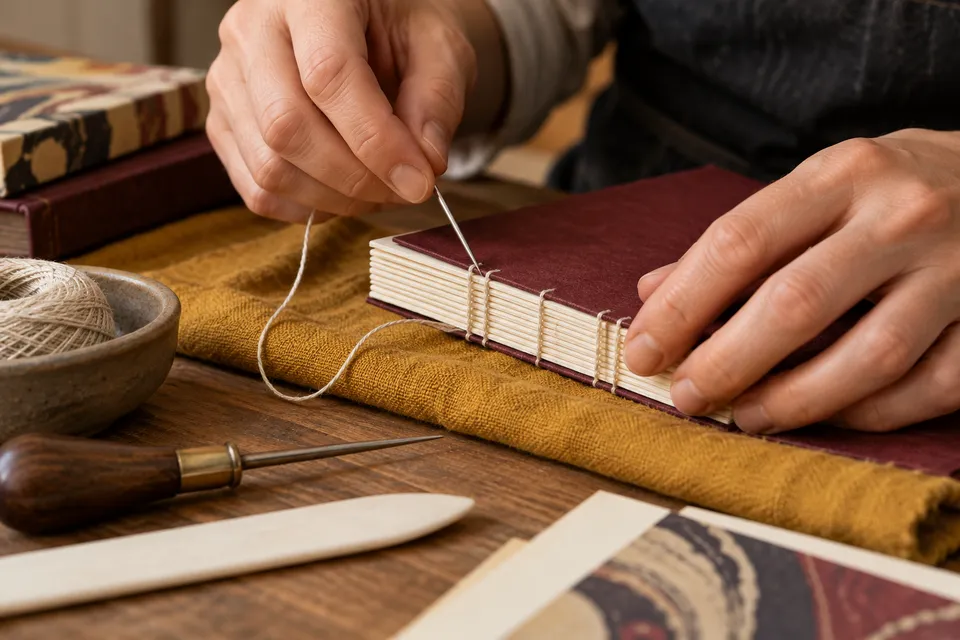
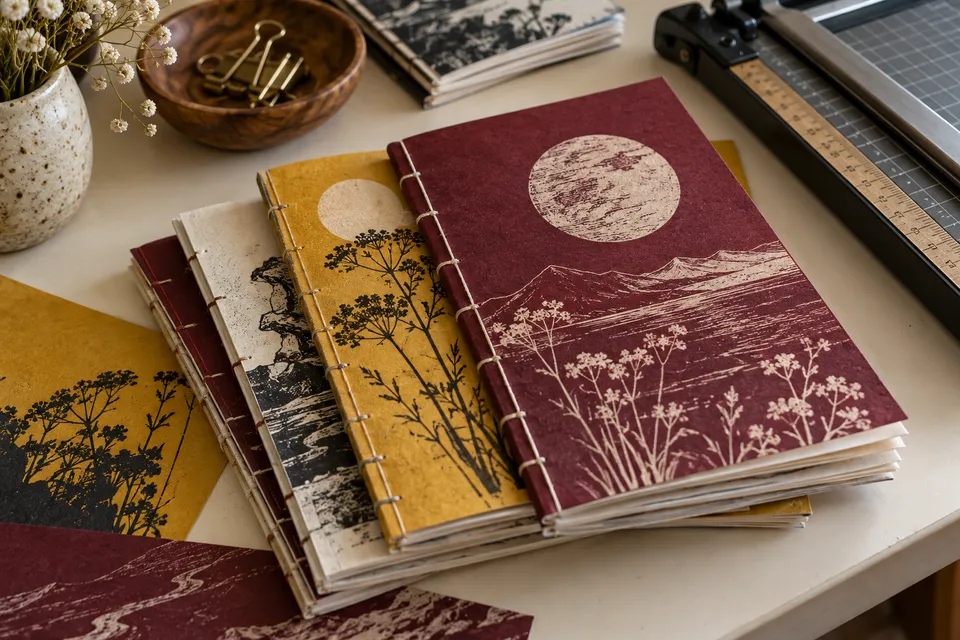
Fold and stitch a rough dummy before designing the final pages. The opening, tension and thickness of the spine affect what can be seen and how comfortably the booklet can be handled.
Explore binding06 / Before the run
Use the list while organising a print session. Checked items are remembered on this device, and the reset starts a fresh preparation.
0 / 6 complete
07 / A searchable reference desk
Search the reference cards by paper, colour, fold or circulation. The visible count changes as you type so an empty result is easy to recognise.
6 prompts available
Test the sheet in both directions; the easier fold can suggest a more comfortable spine.
Use a small proof to inspect where transparent layers create a third colour.
Number a folded sheet by hand before placing content into a flat layout.
Carry a shape across several pages while changing its scale or position.
Check the closed booklet before selecting thread length or a fastening method.
A brief colophon can explain the edition, process and how the copy reached its reader.
08 / Proofs in public
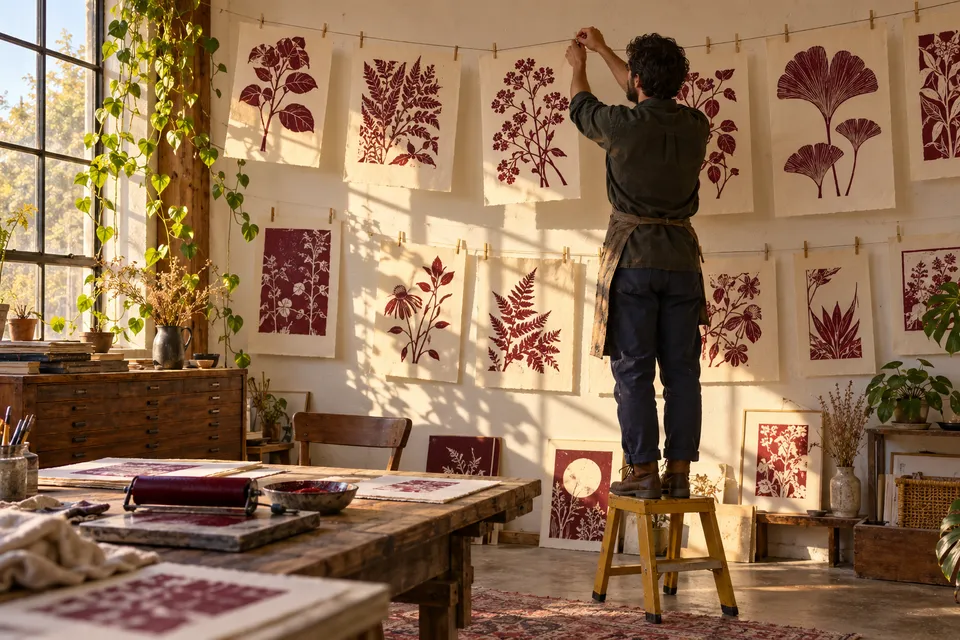
Pin related proofs together while their differences are still useful. A wall of trials can reveal registration drift or an interesting accidental overlap that a single finished print conceals.
09 / At the press
A short print run still benefits from clear choices. These notes address decisions that tend to emerge between the dummy and the final stack.
10 / Beyond the table
Record how many usable copies you made and decide where they will go. A publication becomes a shared object when someone can pick it up, turn its pages and pass it on.